
Table of Contents
Introduction
Every October, a retailer I’ll call Ramesh bhai used to panic. Wedding season was close. His shelves were full, but with the wrong stock. Heavy, stiff, overpriced. Customers touched the sarees, smiled politely and walked out. If you buy for a store or a boutique, you have probably lived some version of this. Ask ten buyers what a jacquard saree means and you’ll get ten different answers, and that confusion is where most bad buying decisions start. Surat sits at the centre of India’s woven saree supply, so a bulk saree manufacturer in Surat is often the first call for retailers who want volume without guesswork.
Here is the thing. A jacquard weave is not just another pattern on the shelf. Customers feel its texture within seconds, and they decide fast. Pick the right type and it sells itself. Pick wrong, and it sits there for months. So let’s sort it out. We’ll go through types, designs, real price ranges, quality checks and wedding styling. Nothing fancy. Just what a smart buyer needs to know before placing the next order.
What Does Jacquard Weaving Actually Mean?
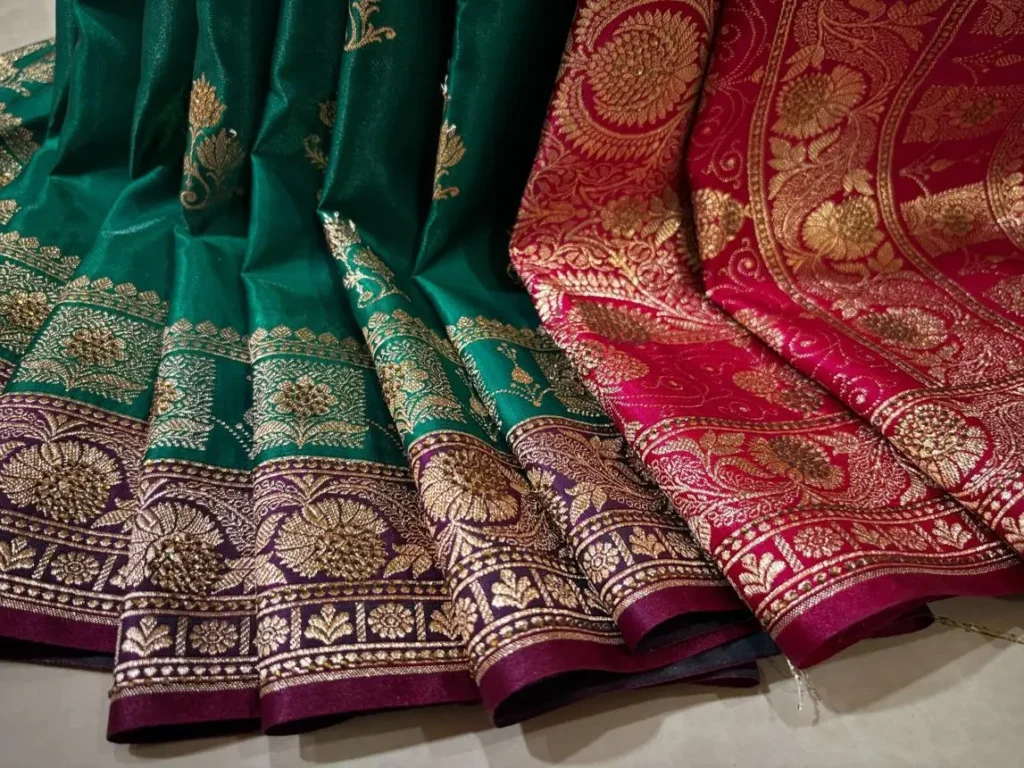
Start with the loom. A jacquard loom lets every warp thread, or a small group of them, rise and fall on its own. Earlier this was controlled with punched cards. Today most mills use electronic systems. The result is a pattern woven into the cloth itself. Not printed on top. Not stitched in later. That’s why the motifs on a good piece feel like part of the fabric, and why you often see a softer mirror image of the design on the back.
The idea goes back to Joseph Marie Jacquard, a French weaver who patented his punched-card loom in the early 1800s. The technique reached India during the nineteenth century, and weavers in Banaras, Surat and other centres adapted it to local taste. Banaras already had a deep brocade tradition, so the new loom fitted in quickly. Today the jacquard saree fabric you see in a showroom can be anything from soft cotton to shimmering viscose, all woven on the same basic principle.
People also mix up jacquard, brocade and plain woven sarees. A quick way to remember it. Jacquard is the method. Brocade is a rich, raised, often metallic-thread style made using that method. A regular woven saree, say a simple handloom or dobby piece, carries only small borders or tiny repeats, because the loom cannot handle large, detailed motifs. So when a customer says she wants a big woven design but nothing too heavy, she is really asking for jacquard.The Main Types of Jacquard Weave in Sarees
Natural Fibre Jacquard: Cotton, Silk and Banarasi
Blended and Synthetic Jacquard: Art Silk, Georgette and Chiffon
Art silk, viscose, polyester, georgette and chiffon bring the rich look at friendlier prices. They are lighter, easier to wash and available in far more colours. This is where most volume buying happens, and it’s where a Surat supplier earns its place. A party wear jacquard saree in georgette or viscose gives that festive shine without the weight of pure silk. Retailers who want a closer look at man-made options can start with these polyester sarees as one example. Quality does vary a lot, though. Good blends drape softly. Poor ones feel plasticky and crackle when you fold them. Test before you commit.
Popular Designs and Patterns Buyers Keep Asking For
Every jacquard saree design tells a small story. Florals and buta, the small repeated motifs, are the safest bet because they suit almost every age group and occasion. Paisley and kalga designs, inspired by the mango shape, feel traditional and work well for customers who want something familiar for family functions. Geometric and contemporary patterns, think clean lines, abstract blocks and thin stripes, appeal to younger buyers and working women who want a modern look without losing the richness of a woven piece.
Then there is the choice between zari work and thread work. Zari gives that metallic gleam and suits weddings. Thread work is softer, lighter on the pocket and easier to wear all day. Many collections mix both, with zari on the border and thread motifs across the body. That’s a smart balance. What are buyers asking for lately? Lighter weights. Tonal colour combinations. Pastels and muted earthy shades sitting next to classic reds and maroons. Slimmer borders. Dual-tone effects. Hardly anyone wants a six-kilo saree anymore. If your supplier offers custom design work, test a small batch in two or three of these directions before committing to a big run.Price Guide: What Retailers and Wholesalers Should Expect
What Decides the Price: Fabric, Weave Density, Zari and Design
Wholesale vs Retail Pricing and Margin Basics
Wholesale rates are quoted per piece, usually with a minimum order quantity, and buying direct from a manufacturer cuts out middlemen. If you are new to wholesale buying, ask for a rate card by fabric and design instead of one blended number. Many retailers add a markup of roughly 30 to 60 percent depending on city and fabric, though it varies. Quick reminder: markup and margin are not the same thing. A saree bought at ₹800 and sold at ₹1,200 carries a 50 percent markup, but your margin is about 33 percent. Also count shipping, packing, returns and the odd defective piece. Smart buyers price after the hidden costs, not before.
How to Identify Quality Before You Order
Flip the saree over first. A good piece has a clean back, with floating threads neatly trimmed and the pattern clearly defined. Long loose threads and uneven patches usually point to rushed finishing. Check that the motif lines up across the body, border and pallu. Mismatches are common in cheaper lots.
Next, zari and colour. Good zari looks bright but not harsh, and it shouldn’t scratch your skin. Rub a damp white cloth on a corner. If colour comes off, walk away or ask for a different batch. Then hold the pallu and let it fall. Fabric weight and drape tell you a lot. It should settle in soft folds, not stand stiff like cardboard, and it should feel pleasant on the hand.
Common sourcing mistakes are easy to spot in hindsight. Ordering from photos alone. Skipping samples. Never checking whether the bulk lot matches the sample. Chasing the lowest rate. Buying too many designs in tiny quantities. Ask for a sample, test it at home, and only then place the bigger order.Wedding Styling Guide
Bridal, Guest and Family-Function Looks (Colours and Blouse Ideas)
Bridal looks lean towards deep reds, maroons, bottle green and royal blue with generous zari and a rich pallu. Guests do better in pastels like peach, sage, dusty rose and powder blue, in lighter weaves that are comfortable for long evenings. Family functions sit in the middle, and mid-tones such as mustard, teal and wine are reliable. By event, haldi suits yellows and marigolds, mehendi suits greens, sangeet loves shimmer and reception calls for jewel tones.
Blouses can make or break the look. Because the saree body is already busy, a simpler blouse usually works better. A plain silk or velvet blouse in a contrast or matching shade, with a boat neck, high neck or elbow sleeves, feels elegant. Many customers now ask for a jacquard saree with a blouse already matched or stitched, so offering a coordinated blouse piece with your stock can lift conversions.Jewellery, Draping and Styling Tips You Can Share with Customers
Care and Maintenance Tips
How to Buy in Bulk Without Regrets
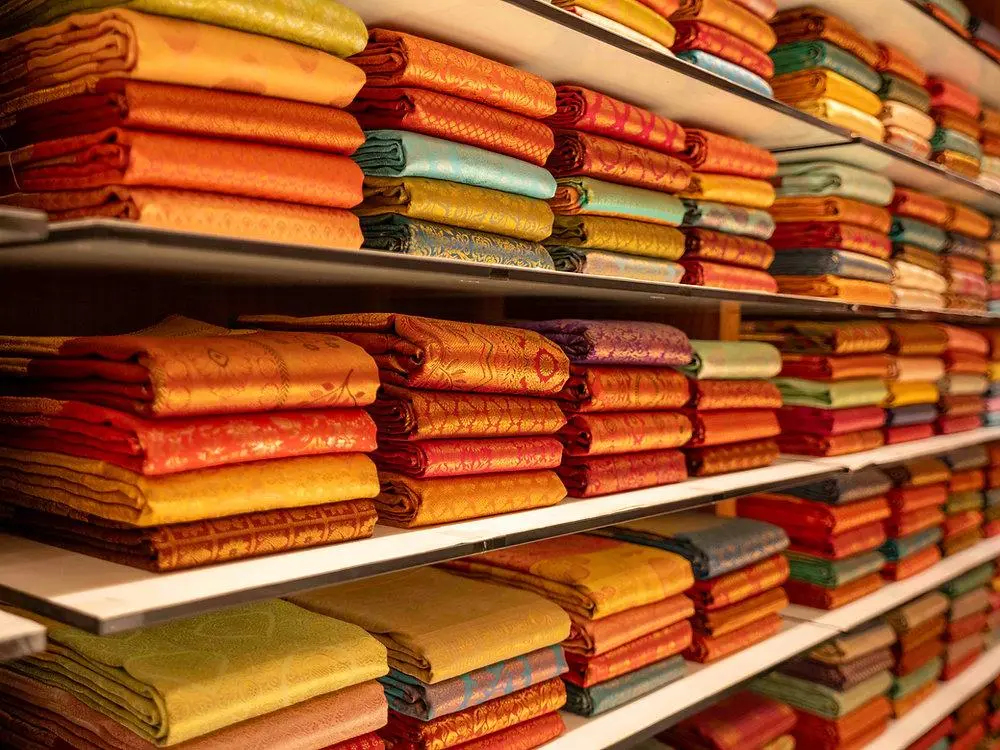
Start with questions. What is the exact fabric composition and weight? Can you send physical samples? How long is the lead time? What quality checks happen before packing? What happens if a lot has defects? Are designs exclusive to my store, or will the neighbouring shop get the same pieces? A reliable supplier answers these without fuss.
Then talk quantities. Every manufacturer sets a minimum order quantity that varies by fabric and design, so ask early and plan your budget around it. Customisation, such as colours, borders and small branding tweaks, is often possible in bulk, and packaging can be done in individual covers with your own tags if you want a boutique feel.
When building your collection, think in layers. Keep a solid base of everyday and mid-range pieces that sell steadily, add a decent share of occasion and party styles, and hold a small premium slice for customers who want something special. A rough split like that is a starting point, not a rule. Watch what your own customers pick up, and adjust each season.
Conclusion
So, what did we cover? How the loom builds a pattern into the cloth. Which fabric types fit which season. How designs, zari and weave density shape the price. How to check quality with your own hands. And how to style it all for weddings. Whether you want a jacquard saree for wedding season or a steady everyday range, the same rule applies: know your customer, test the fabric, and buy in quantities you can actually sell.
If you’d like to see fabrics, ask for a catalogue or talk through a bulk requirement, reach out to Sundersizers. No pressure. Just a good conversation about what will sell in your store.