
Table of Contents
Introduction
Last wedding season, a retailer from Jaipur landed in Surat with one simple goal. Find dependable woven sarees he could reorder every month. Sounds easy, right? It wasn’t. Every shop swore its stock was pure, every rate sheet looked different, and he went home with a headache plus a few pieces that lost their shine after one wash. If you are searching for a trusted jacquard saree manufacturer in Surat, this guide is for you. You can also browse a ready-to-order saree range while you read.
We will walk through fabrics, weaves, designs, quality checks and the wholesale process. Slowly. No heavy jargon. Just what a buyer actually needs to know before placing the first order.
What Is Jacquard Weaving? (And Why Buyers Keep Reordering It)
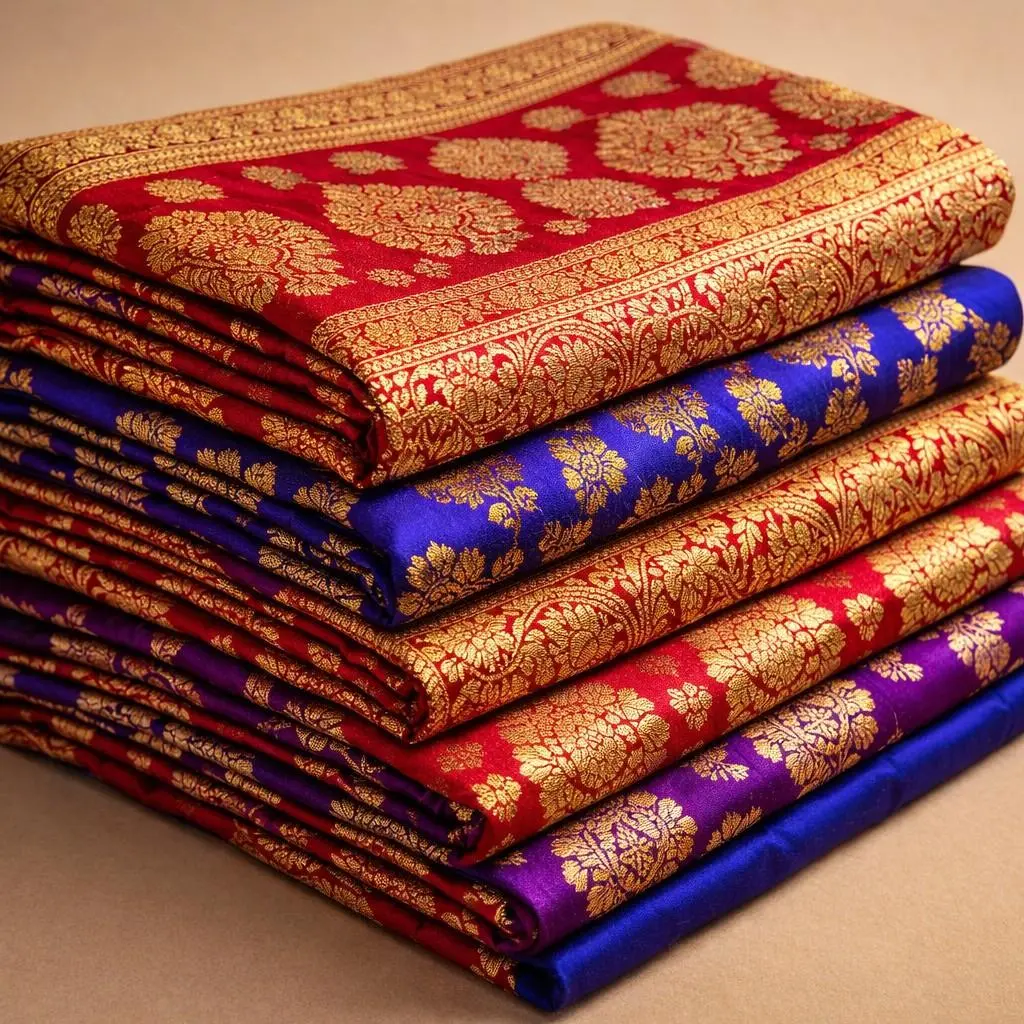
Here is the short version. The pattern in a jacquard-woven saree is built into the cloth, not printed on top of it. A jacquard loom lifts individual warp threads through a punched-card or computer-controlled system, so motifs like paisleys, florals and temple borders appear directly in the weave. That’s why the design doesn’t wash off or fade like a surface print. Turn the cloth over and you will often see tiny floating threads on the back. That is the signature.
Compare it with a printed saree, where ink sits on a flat base. Or an embroidered one, where thread is stitched on afterwards. Both look fine on a hanger. But the woven version has depth, weight and a richness customers notice without being told. Retailers tell the same story again and again. A customer buys one piece for a cousin’s wedding, loves how it drapes, and comes back for three more. That repeat pull is why a jacquard fabric saree sits on the shelf of almost every serious boutique.
So why do buyers reorder? Fewer returns, better margins on festive stock, and designs that look expensive without being priced like luxury.Why Surat Is the Go-To Hub for Jacquard Manufacturing
Walk through the GIDC area in Sachin, or the lanes around Ring Road, and you will see it. Surat built its textile ecosystem over decades, starting with silk and zari trade and growing into one of the country’s biggest centres for synthetic and blended fabrics. Yarn suppliers, sizing units, weaving sheds, dyeing houses and finishing workshops sit within a short drive of each other. Shorter lead times. Fewer middlemen. Prices that are usually sharper than other hubs, without cutting corners on finish.
Here is a difference many new buyers miss. A real manufacturer runs its own looms or controls the weaving process, so it can change a design, a colour or a quantity when you ask. A trader simply resells what he picked up from somewhere else. Both can look great in a catalogue. Only one can fix the problem when a batch goes wrong.
Some units go a step further and work as a jacquard saree fabric manufacturer too, supplying woven yardage to garment makers along with finished sarees. If you want to see what that looks like, check this woven fabric range. It is a good sign of real weaving capacity.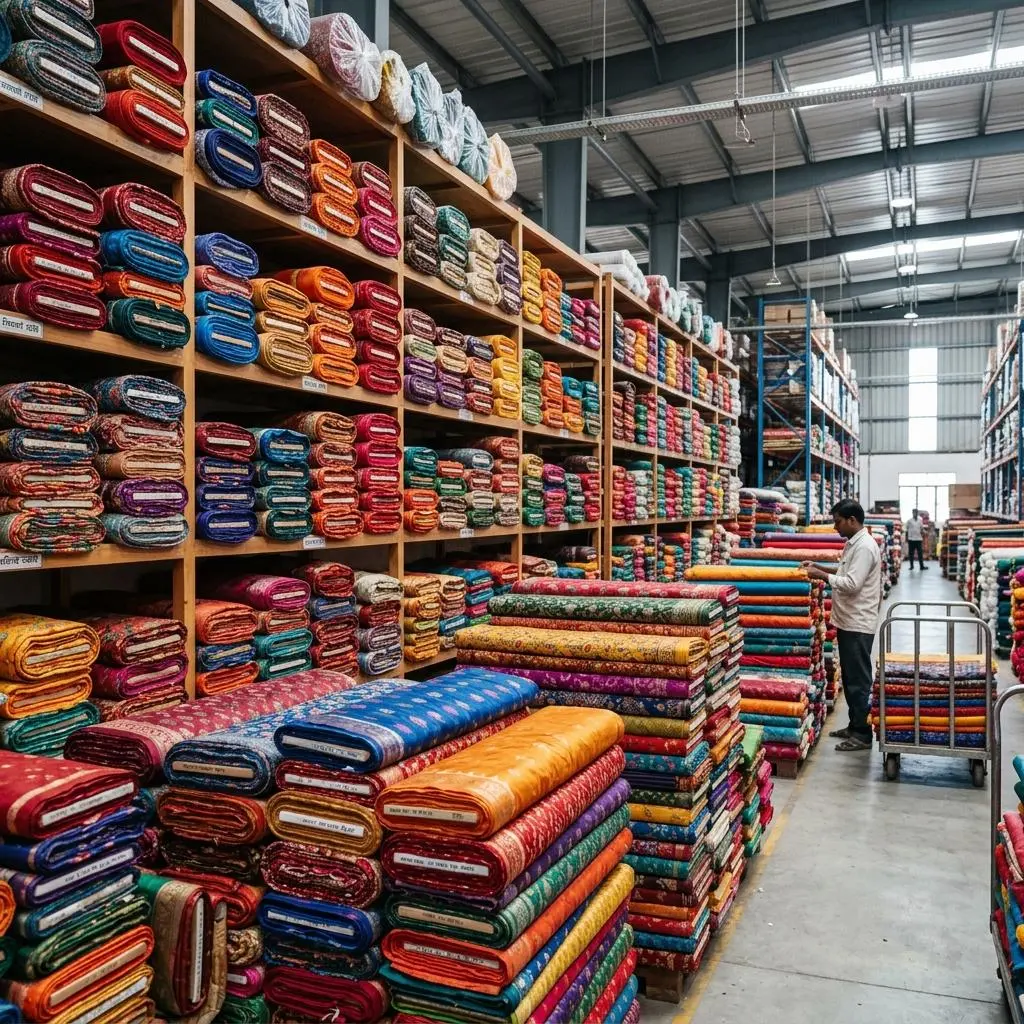
Jacquard Fabrics You Will Come Across
Silk, Art Silk and Banarasi-Style Jacquard
Pure silk is rich, heavy and priced accordingly. Most wholesale buyers, though, deal in art silk and blends, because they give a similar sheen at a friendlier rate. A silk jacquard saree is the natural pick for weddings and big family functions, while art silk covers festive demand without stretching the customer’s budget.
Then there is the Banarasi look. Dense brocade, bold zari motifs, a heavy pallu. Many Surat units weave this style on power looms and sell it at a fraction of handloom cost. If you want that heritage feel in bulk, talk to a banarasi jacquard saree manufacturer in Surat who can show you actual weave samples, not just photos. And if you want the pure fibre, a jacquard silk saree manufacturer will quote differently for mulberry, tussar or blended yarn.Georgette, Chiffon and Cotton-Blend Jacquard
Georgette and chiffon bring lightness. They drape beautifully, travel well and suit summer parties. The weave is usually finer here, so quality checks matter even more.
Cotton is the quiet hero. A cotton jacquard saree breathes well, works for office wear and southern markets, and has loyal buyers who reorder every season. Cotton blended with viscose or polyester sits in the middle, giving some structure plus a little shine.
Choosing fabric really comes down to three things: season, region and customer. Hot, humid markets lean towards cotton and georgette. North Indian wedding circuits prefer silk and brocade. Boutiques with younger buyers like soft finishes with geometric patterns. Simple as that.Popular Jacquard Designs That Actually Sell
Designs move in cycles, but a few never really leave. Paisley, floral vines, peacocks and temple borders have stayed on shelves for generations. They feel safe and familiar, and every age group buys them. Then come the contemporary patterns: geometric grids, abstract florals, small all-over buttis. Younger customers love these, especially for office and festive-day wear.
Think in occasions. Wedding buyers want heavy pallus, rich zari and deep colours like maroon, bottle green and royal blue. Festive buyers like brighter tones and mid-weight cloth. Daily wear needs lighter weaves and calm colours. A smart retailer keeps a base of evergreen shades (reds, golds, navy, black) and adds two or three trend colours each season to keep the display fresh.
Want a collection that doesn’t match the shop next door? Ask about custom pattern options. Because every motif is programmed into the loom, a jacquard weaving saree can carry your own design, your own colour story, even your own border. Many buyers start small with one exclusive design and build from there.How to Judge Quality Before You Place a Bulk Order
A story you hear often in the trade goes like this. A boutique owner gets a sample that looks flawless. Soft fall, bright zari, perfect colour. She orders 200 pieces. The lot arrives, the zari feels scratchy, and the border colour bleeds into the body after the first wash. The sample had been woven on better yarn than the bulk. Expensive lesson.
So what should you check? Start with the weave. Hold the fabric up to the light. You want even density, no loose floats, no gaps. Feel the weight and drape it over your arm. Good cloth falls evenly and doesn’t feel papery unless it is meant to. Rub the zari with your thumb. It should stay firm and not flake. Dip a small swatch in water, press it on a white cloth, and look for colour transfer. Finishing matters too: clean selvedge, neat pallu joints, no puckering.
Before approving any sample, ask for a piece from the actual production lot, not just a showpiece. And watch for look-alikes. Printed fabric with a textured finish is sometimes sold as woven. Flip it over. If the back is flat and the design sits only on the surface, it isn’t jacquard.Wholesale Buying Guide: From First Enquiry to Delivery
MOQ, Pricing and Catalogue-Based Buying
MOQ is the first thing every buyer asks about, and honestly it should be. Minimum order quantity depends on fabric, design and whether the piece is ready stock or made to order. Ready designs usually carry lower minimums. Custom work needs larger runs because the loom has to be set up for it. You can see how one factory explains its minimum order details before you even call.
Pricing normally moves in slabs, so the per-piece rate drops as quantity rises. When you compare quotes from a jacquard saree wholesale manufacturer, compare like for like: same yarn, same fabric weight, same finishing. A cheaper quote with a lighter cloth is not really cheaper. A jacquard saree supplier in Surat will typically send a catalogue first, with every design coded and described, so you can shortlist, ask for samples and then negotiate.
Customisation, Payment Terms and Dispatch
Customisation is where a factory shows its real strength. Colour changes, your own motif, private-label packaging, even your brand tag stitched in. Ask what is possible and what extra lead time it adds.
Payment terms differ. Some units want an advance on confirmation, some take part advance and the balance before dispatch. Get it in writing. Standard lots usually dispatch in about seven to fifteen working days, while export orders can take a little longer. Transport is mostly by road through Surat’s transporters. And one more thing. Always ask for tracking details and a copy of the lorry receipt.How to Choose the Right Jacquard Saree Manufacturer in Surat
Manufacturer vs Wholesaler vs Trader: Know Who You Are Talking To
Three names, three very different businesses. A manufacturer weaves, or controls the weaving. A wholesaler buys in volume and sells onwards. A trader moves stock on thin margins. None of them is bad, but your questions should change depending on who sits across the table. Ask a manufacturer about looms and capacity. Ask a wholesaler about stock depth. Ask a trader where the goods come from.
Before you shortlist anyone, ask for a short video of the loom floor, or better, visit in person. A real manufacturer won’t hesitate. If the answer is vague, that tells you plenty.
A Quick Checklist Before You Sign Off
Run through these four points before the final nod.
- Capacity: Can they handle your repeat volumes in peak season?
- Consistency: Does the second lot match the first?
- Credentials: GST registration, IEC for exports, and an address you can actually visit.
- References: Buyers you can call, not just logos on a page.
Skip a weak one here and you will feel it three orders later.
Care and Handling Tips You Can Pass On to Your Customers
Ready to Source? Let’s Talk
Quality matters. Always has. But consistency matters even more, and the right partner makes all the difference. If you want a jacquard saree manufacturer in Surat who talks openly about MOQ, lead time and quality, connect with Sundersizer. Ask for a catalogue, request a sample, Start with a conversation, and take it from there.