
Table of Contents
Introduction
Organza fabric has earned a lasting place in Indian ethnic wear, valued for its sheer texture, crisp body, and graceful fall. If you are exploring our organza collection for the first time, or simply trying to understand why this material is so popular for sarees and dupattas, this guide walks you through everything from its origin to how you can judge good quality before you buy. Whether you are drawn to a classic organza silk fabric or a contemporary printed organza design, knowing the basics will help you make a more confident choice.
What is Organza Fabric?
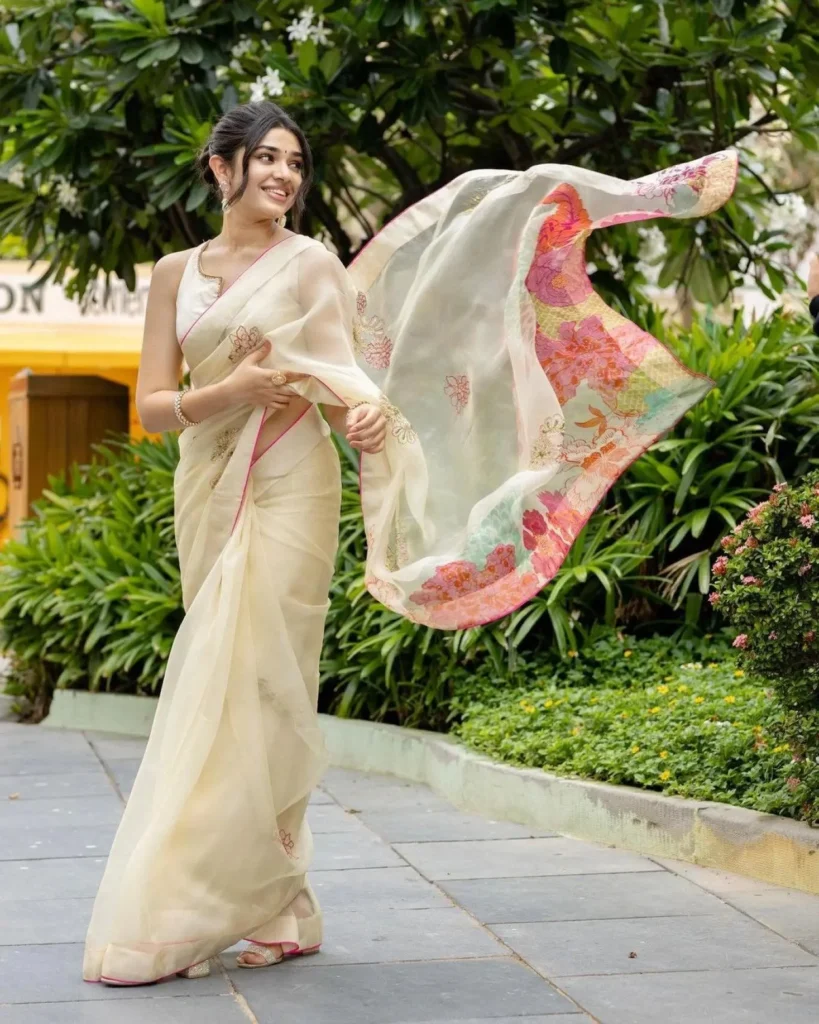
Organza is a lightweight, plain-weave textile traditionally made from silk, though today it is also produced in synthetic versions using nylon or polyester yarns. The fabric gets its characteristic stiffness and transparency from tightly twisted yarns woven in a simple over-under pattern, which leaves small, even gaps between the threads. This is what gives organza its sheer, almost glass-like appearance while still holding structure well enough to stand away from the body slightly rather than clinging to it. That balance of lightness and body is exactly why the fabric works so well for garments that need volume without heaviness, such as saree pallus, dupatta borders, and layered blouse details.
Types of Organza Fabric Used in Sarees and Dupattas
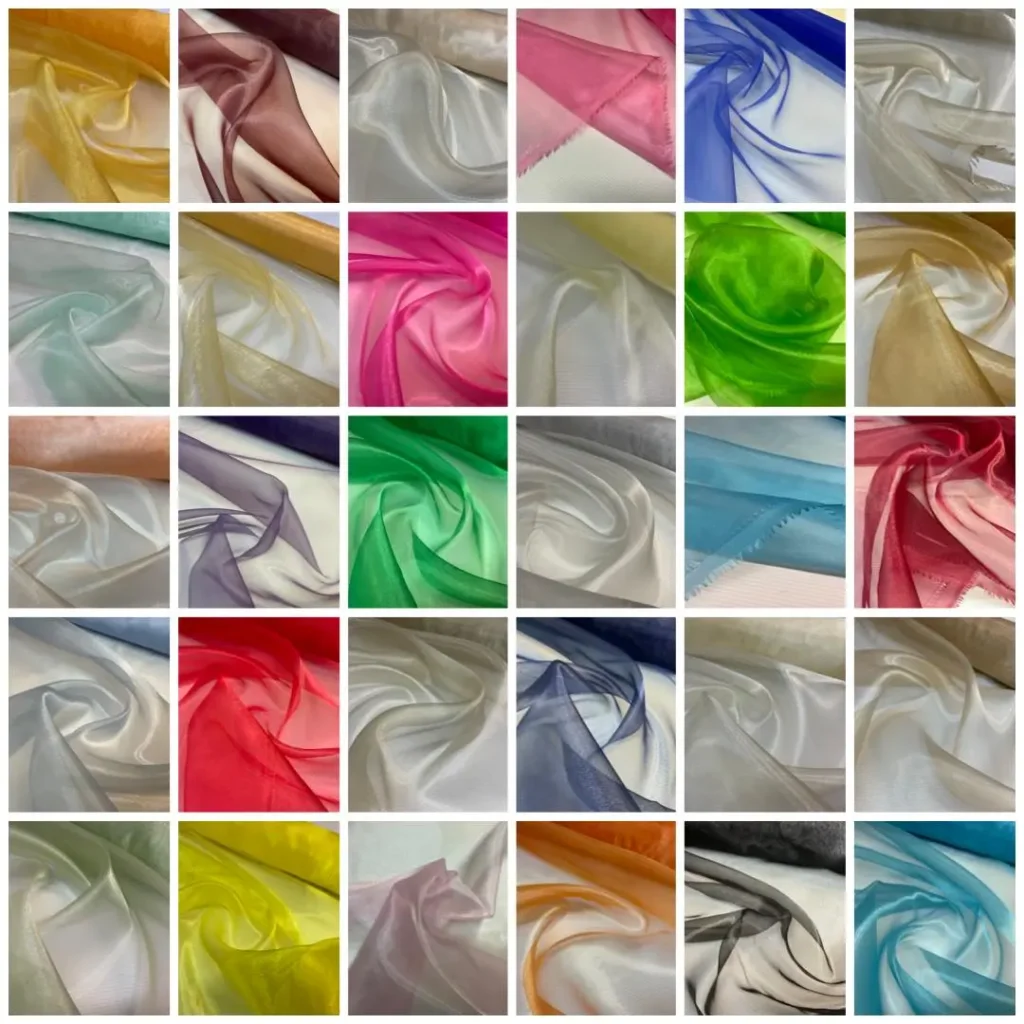
Not all organza is the same, and the differences matter when you are choosing fabric for a specific garment. Pure organza silk fabric, made from natural mulberry silk, offers a soft sheen and a slightly warmer drape, and it tends to be the preferred choice for bridal or festive sarees where quality and finish are non-negotiable you can browse our silk organza range to see how these differences show up in person. Synthetic organza, on the other hand, is more affordable, easier to maintain, and widely used for everyday dupattas or budget-friendly saree collections without compromising too much on the visual appeal.
Within these broad categories, you will also come across several finishes worth knowing:
- Tissue organza, which has a metallic sheen created by weaving in fine gold or silver threads
- Crush organza, known for its textured, slightly crinkled surface that adds visual depth
- Embroidered and designer organza, often embellished with sequins, thread work, or cutdana for statement pieces
- Printed organza, popular for floral, digital, and abstract patterns on lighter, more casual sarees and dupattas
Why Organza is Popular for Sarees and Dupattas
The popularity of organza fabric for sarees and dupattas comes down to a few practical qualities. First, its sheer quality allows for beautiful layering effects, especially in dupattas that are meant to float rather than sit heavily on the shoulders. Second, the crisp texture holds pleats and drapes with a defined structure, which is why organza sarees often photograph so well at weddings and formal events. Third, despite its structured look, the fabric remains breathable, making it a reasonably comfortable option even in India’s warmer months compared to heavier silks or velvets. Finally, organza takes prints, embroidery, and embellishments exceptionally well, giving designers and manufacturers wide creative flexibility across price points.
How to Identify Good Quality Organza Fabric
Since organza is available in such a wide price and quality range, it helps to know a few practical checks before buying in bulk or for a special occasion. A simple burn test can tell you a lot: pure silk organza burns slowly and smells like burning hair, leaving behind a fine ash, while synthetic versions melt and often give off a plastic-like odour. Feel is another good indicator; genuine organza silk fabric has a slightly rougher, more textured hand-feel compared to the smoother, almost slippery touch of polyester organza. It also helps to check the fabric against light, since good quality organza maintains an even, consistent transparency across the width rather than patchy thin or thick spots, which usually point to inconsistent yarn quality or poor weaving.
Organza vs Other Fabrics: Chiffon, Net, and Georgette
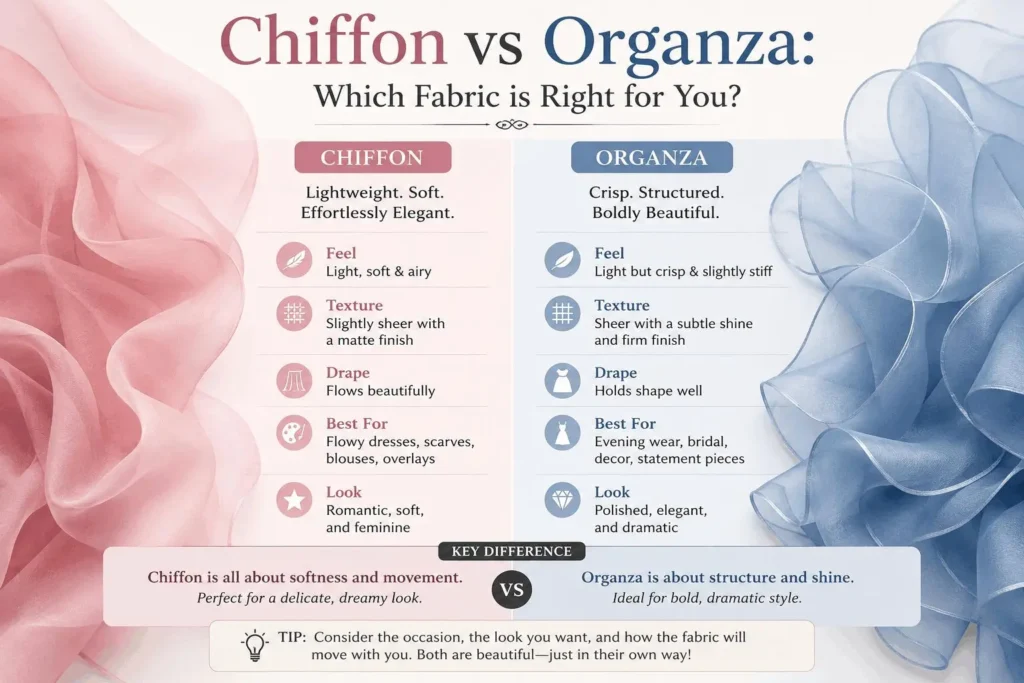
Buyers often compare printed organza fabric with other sheer materials before deciding, and the differences are worth understanding. Chiffon is softer and more fluid, making it drape closer to the body, whereas organza holds a stiffer structure and stands away slightly, which is why the two create very different silhouettes even in similar colours. Net fabric has visible mesh-like holes and a more decorative, delicate feel, often used for heavily embellished dupattas, while organza offers a smoother surface that works better for prints and subtle embroidery. Georgette sits somewhere in between in terms of weight, but it lacks the crispness that makes organza distinct; if you want a saree or dupatta that holds its shape and catches light with a slight sheen, organza remains the more structured choice our saree and dupatta fabric guide covers these comparisons in more detail if you’re weighing options side by side.
Caring for Organza Sarees and Dupattas
Proper care goes a long way in preserving the finish of designer organza fabric over time. Hand washing in cold water with a mild detergent is generally safer than machine washing, particularly for pure silk organza, since aggressive spinning can damage the delicate weave. Sarees and dupattas made from this fabric should be dried in shade rather than direct sunlight, which can weaken the fibres and fade prints or embroidery over repeated exposure. When ironing, a low heat setting with a thin cloth placed over the fabric prevents the yarns from scorching or losing their characteristic crispness, and storing pieces folded loosely in a breathable cotton cover, rather than plastic, helps maintain both shape and shine between wears. Our fabric care tips page goes into more detail if you’re maintaining a larger collection of sheer sarees and dupattas.
Buying Organza Fabric: What Buyers Should Check
Whether you are a retailer, boutique owner, or someone sourcing for a bulk order, a few practical details can save time and prevent disappointment later. It is worth confirming fabric width and roll length upfront, since these vary between manufacturers and directly affect how much material a single saree or dupatta will actually require. Ask whether you are buying directly from a manufacturer or through a trader, as pricing, minimum order quantities, and consistency across batches tend to be more reliable at the source. Finally, request a small sample swatch before committing to a bulk order, particularly for designer organza with embellishments, so you can verify colour accuracy, finish, and workmanship against your expectations before the full order is placed. You can also check our wholesale ordering process for details on MOQs and sampling.
Conclusion
From bridal sarees to everyday dupattas, organza fabric continues to hold its place as one of the most versatile sheer textiles in Indian ethnic wear, offering the right mix of structure, breathability, and visual appeal across price points. Whether you are leaning towards a rich organza silk fabric for a special occasion or a lighter printed organza for daily use, understanding weave quality, finish, and care will help you get the most out of your purchase. For sourcing genuine, well-finished organza directly from the manufacturer, Sunder Sizers offers a range of options suited to both retail and bulk requirements, backed by consistent quality across batches.