
Table of Contents
Introduction
If you have ever stood in front of a saree rack completely torn between two shimmering options, you already know how confusing it can get. The dola fabric vs tissue fabric comparison is one of the most searched questions among festive and wedding shoppers, and for good reason both fabrics look rich, both catch the light beautifully, and both are staples in Indian ethnic wear. Yet the moment you touch them, you realise they are built completely differently and even age differently over years of wear. This guide breaks down the difference between dola fabric and tissue fabric in simple, practical terms, so you walk into your next purchase knowing exactly what you are paying for.
What Is Dola Fabric?
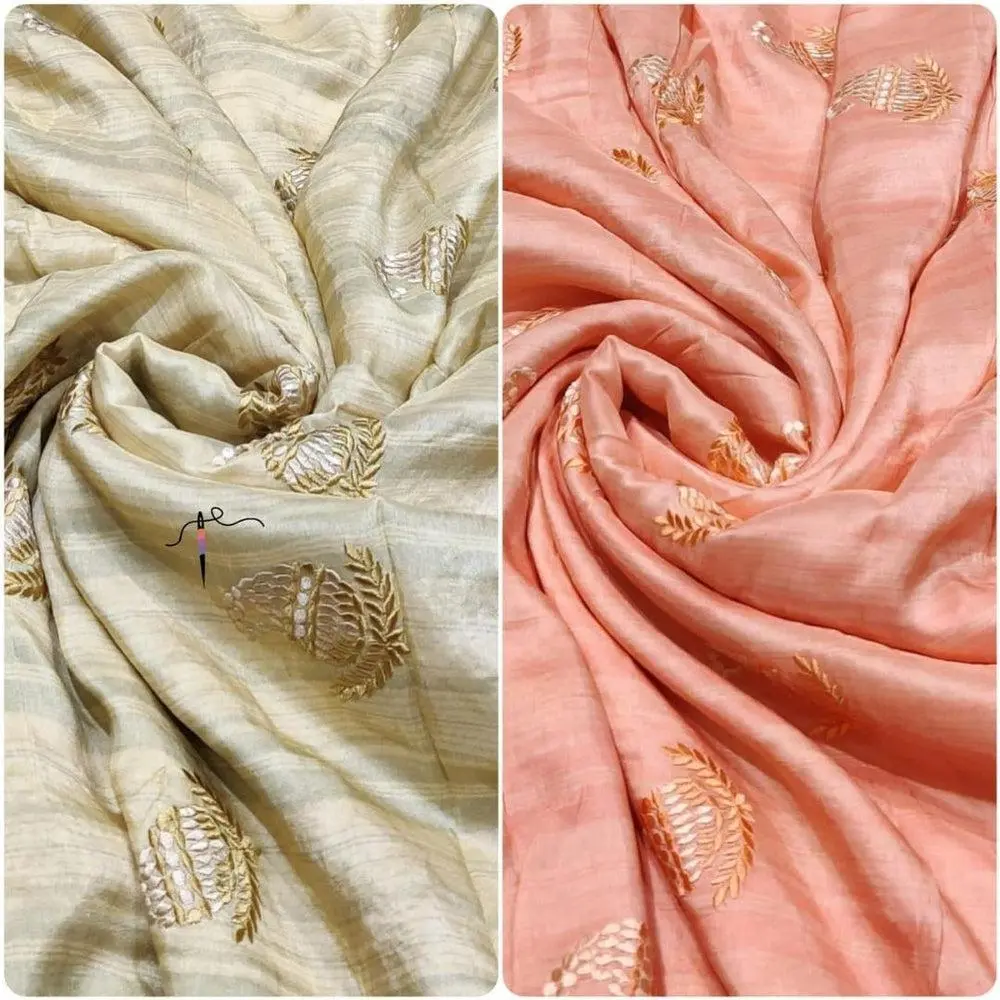
Dola fabric, more commonly known as dola silk, is a blended textile that combines silk-rich yarns with supportive fibres such as viscose or fine polyester. This blend is intentional,it is engineered to hold onto the softness and gentle sheen of traditional silk while shedding a lot of the weight and stiffness that comes with pure silk weaves. Understanding what dola fabric brings to the table is really the first step in solving the puzzle, because once you know what dola is made of, the differences with tissue start to make a lot more sense.
Composition and Texture
Dola fabric has a smooth, almost buttery hand-feel. It isn’t sheer you can’t see through it the way you can with lighter fabrics and it holds its shape well when pleated or gathered. The finish is a soft, subtle lustre rather than a loud shine, which is part of why it photographs so well without looking artificial.
Common Uses
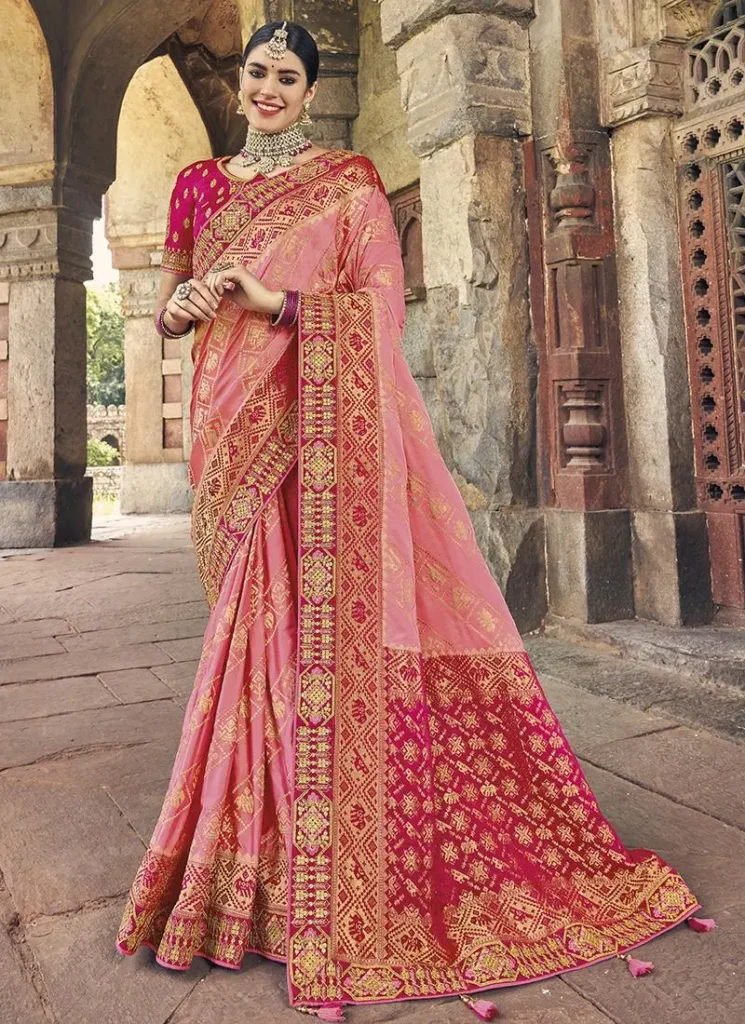
You will most often find dola fabric used in sarees, lehengas, and semi-bridal wear where zari borders, bandhani prints, or woven motifs need a fabric strong enough to carry embroidery without collapsing under its weight. It has become a favourite for wedding functions, sangeets, and receptions where guests want the richness of silk without spending the whole evening adjusting a heavy pallu.
What Is Tissue Fabric?
Tissue fabric works on an entirely different principle. Instead of blending silk fibres for softness, tissue is woven using fine base threads with metallic gold or silver zari threads running through the weave itself, which is exactly why the dola fabric vs tissue fabric conversation often confuses first-time buyers who assume shiny fabric is a single category.
Composition and Texture
Tissue has a distinctly papery, crisp feel because of how tightly the metallic threads are woven into the base cloth. It is one of the lightest fabrics you will come across in ethnic wear, and it carries a natural transparency, hold it up to light and you will see straight through it in most weaves. This sheerness is a signature trait, not a flaw; it’s what gives tissue sarees their floaty, ethereal movement.
Common Uses
Tissue fabric is typically chosen for sarees and dupattas where the goal is maximum shimmer with minimum weight, think cocktail parties, evening receptions, or festive outfits meant to catch light under chandeliers and stage lighting. Because it is so lightweight, it also layers well over contrast petticoats or underskirts that peek through the sheer weave.
Dola Fabric vs Tissue Fabric: Key Differences
When you place dola fabric vs tissue fabric side by side, the differences become obvious within seconds of touching both. This is really the heart of any honest dola fabric and tissue fabric comparison, so it’s worth going through each factor individually rather than making a blanket statement about which is better.
Weight, Feel, and Shine
Dola fabric is medium-weight, opaque, and softer to the touch, with a gentle glow rather than a bright shimmer. Tissue fabric is featherlight, semi-transparent, and has a distinctly metallic, high-shine finish because of the zari woven directly into the threads. Run your fingers over both and the contrast is instant: dola feels smooth and fluid, while tissue feels slightly rough and papery, a direct result of the metallic yarn.
Price and Durability
In terms of price, the dola fabric vs tissue fabric decision often comes down to budget alongside occasion. Dola fabric, being a silk-viscose or silk-polyester blend, tends to be more durable for repeated wear and handles regular folding and travel reasonably well. Tissue fabric, precisely because of its delicate, sheer construction, needs more careful handling,snagging is more common, and the metallic threads can dull faster if not stored properly. This doesn’t make one fabric objectively superior; it simply means they’re built for slightly different lifespans and levels of everyday practicality.
Which Occasions Suit Each Fabric Best?
This is where the dola fabric vs tissue fabric choice becomes less about which fabric wins and more about matching fabric to event. Dola fabric works beautifully for weddings, receptions, and long-duration functions where you’ll be on your feet for hours, its moderate weight and structured drape hold up through an entire evening without feeling exhausting on the shoulder. Tissue fabric, on the other hand, shines (quite literally) at shorter evening events, cocktail parties, or as a statement dupatta paired with a simpler outfit underneath, where its shimmer and movement can take centre stage without the wearer needing to manage extra weight.
How to Tell Dola and Tissue Apart When Shopping
Even with descriptions in hand, a lot of buyers still second-guess themselves in-store, and honestly, a quick touch test settles most dola fabric vs tissue fabric confusion within seconds. Run the fabric between your fingers: if it feels smooth and slightly heavier, you’re likely looking at dola; if it feels crisp, papery, and almost weightless, that’s tissue. Next, hold the fabric up to a light source dola stays mostly opaque, while tissue shows a clear see-through quality at the folds. Reading the composition tag also helps, since dola listings usually mention a silk-viscose blend, while tissue listings call out zari or metallic thread in the weave. For a closer look at how these details show up in real pieces, our Tissue Saree Edit is worth browsing alongside the dola collection.
Styling Tips for Both Fabrics
Styling also shifts depending on which side of the dola fabric vs tissue fabric divide you land on. Dola fabric pairs beautifully with structured, embroidered blouses and statement jewellery like kundan or polki sets, since the fabric itself has enough body to balance heavier accessories. Tissue fabric, given its sheer and lightweight nature, tends to look best with minimal contrast blouses and lighter metallic jewellery that doesn’t compete with the fabric’s own shimmer. If you’re building out a festive wardrobe with both fabrics, our Festive Blouse Design Guide has more detail on pairing choices by fabric type.
Care and Maintenance
Care routines differ meaningfully across the dola fabric vs tissue fabric spectrum, so treating both the same can genuinely shorten their lifespan. Dola fabric generally tolerates gentle hand washing or professional dry cleaning, and can be folded and stored in breathable cotton bags without major creasing concerns. Tissue fabric, because of its delicate metallic weave, should almost always be dry cleaned rather than washed at home, and is best stored rolled instead of folded to avoid permanent creases along the zari lines. A few habits help both fabrics last longer: keep them away from direct sunlight and perfumes or sprays, and air them out occasionally rather than leaving them sealed for months.
Conclusion
At the end of the day, the dola fabric vs tissue fabric decision isn’t about picking a winner,it’s about picking what fits your comfort, your occasion, and your budget. If you want something with body, structure, and everyday resilience, dola fabric is likely your answer. If you’re chasing that featherlight, shimmering statement piece for an evening event, tissue fabric will serve you better. Either way, understanding the difference between dola fabric and tissue fabric means you’ll never again stand in front of a rack unsure of what you’re actually buying. Ready to see both fabrics in person? Explore Sundersizer curated saree and lehenga edit to find the piece that fits your next occasion.